
Behavioral Skills Training (BST): Step-by-Step Guide to Unleashing Full Potential
Behavioral Skills Training (BST) is an evidence-based training method that aims to teach individuals new skills using a systematic approach. This training technique has been widely applied in various settings, such as education, healthcare, and workplace environments. BST is now widely used in ABA practices and is recognized as one of the best ways to train staff, parents and non-ABA professionals how to use ABA interventions.
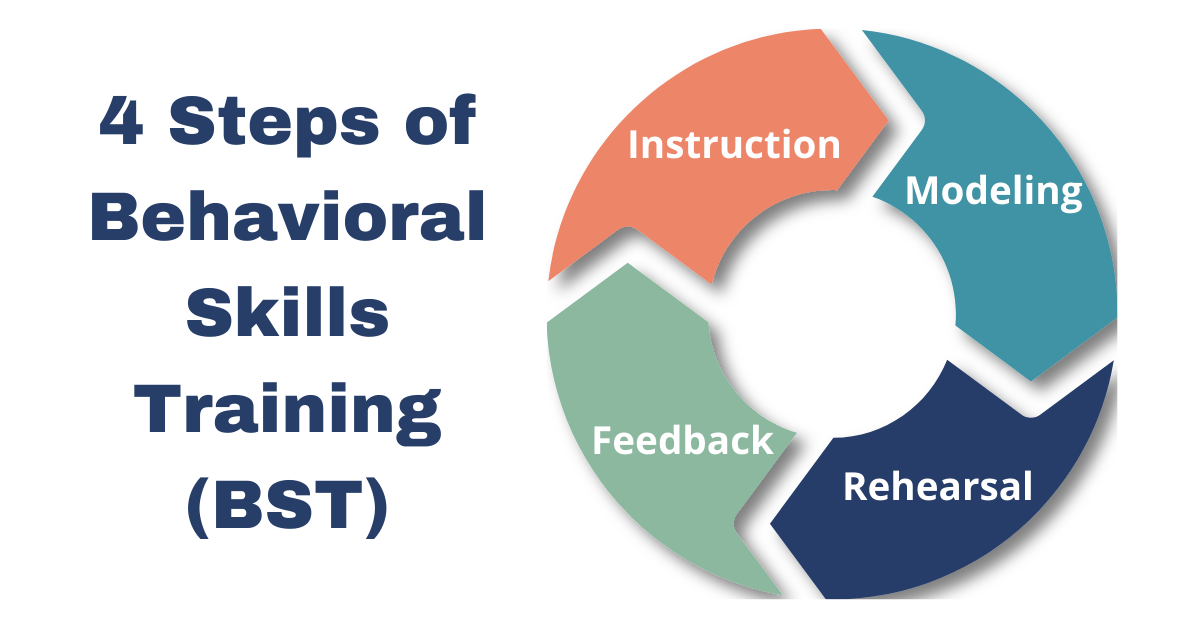
BST includes 4 basic steps including providing clear instructions, modeling desired behaviors, offering practice opportunities and providing feedback for trainees. Research has demonstrated the effectiveness of BST in improving performance across a range of settings and target audiences. From training teachers to implement behavioral momentum, to caregiver implementations of the Premack Principle, BST has shown positive results when used correctly.
Implementing BST can be tailored to suit different scenarios and individual needs, making it a versatile and adaptable approach. It is essential to evaluate the effectiveness of the training and continuously refine the process based on feedback and outcomes to achieve the desired results.
Behavioral Skills Training (BST): Step-by-Step Guide to Unleashing Full Potential
Understanding Behavioral Skills Training
Key Takeaways
Behavioral Skills Training is a versatile, evidence-based method for teaching new skills.
Components of BST include clear instructions, modeling, feedback, and practice opportunities.
BST has shown positive results across various settings and target audiences.
Understanding Behavioral Skills Training
Behavioral Skills Training (BST) is a proven and effective method for teaching new behaviors and skills to individuals, and is especially good for staff and parent training. This training method comprises various components that work together to help learners achieve mastery in a specific skill or behavior.
BST allows you to systematically teach a wide range of skills to a variety of learners. This teaching method is especially helpful for teaching staff and parents to implement behavioral interventions or to use strategies included in a learner's skill acquisition program. This significantly improves the accuracy of implementation and the outcomes for your learners.
BST involves 4 specific steps such as:
Instruction: The trainer provides a clear and concise explanation of the desired behavior or skill to the learner.
Modeling: The trainer demonstrates the correct way to perform the desired skill or behavior, allowing the learner to observe and understand the expectations.
Rehearsal: The learner practices the skill or behavior, receiving guidance and support from the trainer.
Feedback: The trainer provides constructive feedback on the learner's performance, pointing out areas that need improvement and reinforcing aspects done well.
To achieve mastery in BST, trainers often utilize several training techniques, including:
Task analysis: Breaking down complex skills or behaviors into smaller, manageable steps.
Shaping: Gradually modifying and refining a learner's behavior through positive reinforcement.
Prompting: Providing cues or assistance to guide the learner in performing the desired behavior.
Chaining: Teaching the individual steps of a sequence and then combining them to perform the complete skill or behavior.
These are the same skill acquisition techniques you use with your autistic learners. These are simply highly effective teaching strategies and not tools that are only effective with neurodiverse learners. This training method's effectiveness lies in its structured process and ongoing support, ensuring each learner has the opportunity to achieve their full potential.
If you want to dive deeper into BST, this video expands on the ideas in this post and includes strategies for both parent and staff training. It’s packed with practical tips you can use right away.
Steps for Implementing BST
Behavioral Skills Training (BST) is an effective teaching method used to provide training for various skills. There are four critical steps that contribute to its success: Instruction, Modeling, Rehearsal, and Feedback.
Instruction
When implementing BST, the first step is to provide clear and concise instructions to the trainee. These instructions should explain the targeted behavior or skill, its importance, and the steps required for its execution.
Ensure instructions are easy to understand
Use examples when possible
Break down complex behaviors into smaller tasks
Offering comprehensive instructions helps the trainee gain an initial understanding of the skill, setting the foundation for the following components.
Here's an example:
You have decided to use Functional Communication Training (FCT) with one of your learners, Kevin. The RBT who has been assigned to the case has never implemented the protocol to teach FCT. You arrange to meet with her 30 minutes before her next session to begin training. During this time, you teach her about FCT. You:
Tell her that this intervention is designed to help Kevin learn to use communication to get what he wants rather than using target behavior. Kevin engages in aggression because he wants access to his iPad but also because he doesn't want to do the things he is asked to do. FCT will teach Kevin that he can get his iPad and escape the tasks by using his words to communicate what he wants. You use language that's easy for the RBT to understand.
Next, you provide examples of different situations where Kevin could use communication rather than aggression to get what he wants. You provide examples of how it has helped other learners and talk about how you were able to help the learners gradually increase their tolerance of demands over time, which is your plan for Kevin.
You review the steps of teaching FCT:
Create an opportunity to practice by presenting the demand (prompt him to transition from the iPad to a non-preferred task.
Immediately prompt Kevin to provide the communicative response, "more time."
Reinforce any approximation of this response immediately by removing the demand and allowing him to continue with the iPad.
Gradually introduce a delay to reinforcement by requiring he complete a simple task like giving you a high-five or thumbs up before giving him access to the iPad and removing the demand.
Let the RBT know that you will be available to answer questions and help to problem solve as she goes through the process.
The instruction step should include reviewing the documentation in the behavior intervention plan (BIP) and/or the skill acquisition plan so the trainee (i.e. RBT, parent, or non-ABA professional) can refer back to these instructions.
Modeling
Modeling involves demonstrating the targeted behavior to the trainee. This demonstration can be performed by the trainer or through videos or other resources. The goal is to show the trainee the correct execution of the desired behavior.
Highlight each step of the behavior during the demonstration
Address potential difficulties the trainee may encounter
Encourage the trainee to ask questions for clarification
Let's continue with the example from above:
You find a really good YouTube video that shows staff teaching FCT to a learner similar to Kevin. You pause the video to highlight each of the steps.
You discuss the challenges you anticipate when she teaches Kevin to use FCT, including the fact that he might engage in aggression before she has time to give him back his iPad or that he might refuse to use the communicative response you decide to teach.
You give the RBT an opportunity to ask questions and take the time to answer them thoughtfully.
Rather than using a YouTube video as a model, you can also demonstrate how to use the skill with the RBT playing the role of the learner and you playing the role of the RBT. Begin by slowly going through each of the steps, then asking the RBT to provide one of the challenges you anticipate the learner to present.
Rehearsal
Rehearsal is a crucial component of BST, as it gives the trainee the opportunity to practice the learned behavior. This process often involves role-play situations where the trainee can apply the newly acquired skill in a controlled environment.
Provide opportunities for repeated practice
Offer guidance and support during rehearsals
Encourage self-monitoring and self-evaluation
Let's continue the example from earlier:
After reviewing the YouTube video and answering the RBT's questions, you create an opportunity for her to practice by participating in a role-play where you act as the learner. You begin by cooperatively communicating when prompted to do so by the RBT, but then add some challenging situations that might come up in real-life situations with Kevin.
During this practice, you prompt the RBT through many of the steps, fading prompts as she becomes more comfortable with the protocol.
You provide her with a fidelity checklist so she can monitor her own application of FCT during sessions and refer to it if she needs a reminder of the steps. You let her know that during the upcoming session, you will also use the checklist to provide feedback.
As with our learners, staff, parents, and non-ABA professionals often appreciate errorless learning. If you tell your trainee before beginning the Rehearsal phase of BST that you plan to walk them through each of the steps as they go, it's likely to feel less intimidating and awkward to go through the steps. Fade this level of support until the trainee is able to perform the skill on their own.
Feedback
Lastly, providing feedback is critical to the growth and development of the trainee's skills. The trainer should assess the trainee's performance during rehearsal, identifying areas of strength and areas that need improvement. The trainee should have an opportunity to practice the skill with a learner as soon after the rehearsal phase as possible. The trainer should provide concrete, objective feedback.
Offer immediate and specific feedback
Balance positive reinforcement with constructive criticism
Use feedback to inform further instruction and modeling
Incorporating these components into BST ensures a comprehensive learning experience that can effectively teach various skills and behaviors. By following these steps methodically, trainers can help trainees become confident and proficient in their newfound abilities.
Let's finish out the example we have been using:
Immediately after the RBT finishes rehearsing implementing FCT, it's time to start the session with Kevin. You remind her to place the fidelity checklist on the table near where he is sitting with his iPad. You also remind her that she can reference it if she needs a reminder of the steps. You let her know that you're there to help her out if she gets stuck and it's natural for this to feel a little awkward at first. You're available to provide some tips and tricks to help this go more smoothly.
You unobtrusively observe the RBT as she presents the demand to Kevin. She prompts the communicative response immediately after presenting the demand, but Kevin pushed her away rather than using words. Although you practiced this scenario, the RBT struggles to remember how to respond. You discretely remind her of what she should do. When she does, Kevin responds by saying he wants more time. She reinforces the communication by giving him more time which is in line with the protocol.
You record the data in your fidelity checklist and you ask the RBT to do the same while Kevin is engaged with his iPad. You compare your checklist to the one the RBT completed and you both recorded the same data. You point out the things the RBT did really well, including how she accurately recorded the data on the fidelity checklist. You review the step she struggled with and asked if she had questions or wanted to practice more. She said she felt confident now but wanted another opportunity to try it with Kevin.
Following the 3 extra minutes Kevin was allowed according to the protocol, the RBT again presented him with the demand to put the iPad away. This time when he pushed her away, she followed the protocol.
We are often taught to use the "feedback sandwich" when providing feedback. The intention is to make the feedback more tolerable to the trainee. There are many challenges with this method of feedback, including the fact that it's unclear to the trainee whether you approve of their performance or not.
Benefits and Applications of BST
Behavioral Skills Training (BST) is a well-established and evidence-based method for teaching a variety of skills and behaviors. It combines several learning strategies, such as instruction, modeling, rehearsal, and feedback, to help individuals acquire and refine their abilities. This technique is widely used in various settings and has several benefits.
Efficiency and Effectiveness: BST is known for its efficient approach to teaching new skills. By breaking down complex tasks into smaller components and incorporating practice and feedback, individuals can quickly grasp essential concepts and improve their performance.
Flexible Application: BST can be adapted to suit different learning styles and settings. It can be implemented using various methods, including verbal instruction, video modeling, and practical demonstrations. This adaptability allows for tailored training experiences that cater to individual needs and preferences.
Application to Diverse Populations: Research has shown that BST is beneficial for a range of populations, such as teaching safety skills to autistic children and helping graduate students utilize ABA techniques.
Enhancements with Technology: Advancements in technology have enabled new applications of BST, such as virtual reality training. Virtual reality allows for immersive and engaging training experiences, as demonstrated in a study on teaching a verbal mathematical questioning strategy.
Some notable applications of BST include:
Mental Health: BST has been employed to train therapists and clinicians in the delivery of cognitive-behavioral interventions for mental health disorders like anxiety and depression.
Education: Teachers can be trained using BST to effectively implement classroom management strategies, such as the Good Behavior Game, which has been shown to improve implementation adherence and overall quality.
Safety Skills: BST has been used to teach street-crossing skills to autistic children and adolescents.
In summary, Behavioral Skills Training is a valuable and versatile approach to skill acquisition and improvement. It effectively balances theory and practice, optimizing learning experiences through tailored training and feedback. The flexibility and adaptability of BST make it an excellent choice for training in various fields and populations.
References and Related Reading
Barker, L. K., Moore, J. W., Olmi, D. J., & Rowsey, K. (2019). A comparison of immediate and post-session feedback with behavioral skills training to improve interview skills in college students. Journal of organizational behavior management, 39(3-4), 145-163.
DiGennaro Reed, F. D., Blackman, A. L., Erath, T. G., Brand, D., & Novak, M. D. (2018). Guidelines for using behavioral skills training to provide teacher support. Teaching Exceptional Children, 50(6), 373-380.
Dogan, R. K., King, M. L., Fischetti, A. T., Lake, C. M., Mathews, T. L., & Warzak, W. J. (2017). Parent‐implemented behavioral skills training of social skills. Journal of applied behavior analysis, 50(4), 805-818.
Driftke, M. A., Tiger, J. H., & Wierzba, B. C. (2017). Using behavioral skills training to teach parents to implement three-step prompting: A component analysis and generalization assessment. Learning and Motivation, 57, 1–14. https://doi.org/10.1016%2Fj.lmot.2016.12.001.
Goldsmith, T. R. (2008). Using virtual reality enhanced behavioral skills training to teach street -crossing skills to children and adolescents with autism spectrum disorders (Order No. 3323523). Available from Psychology Database. (304448424). Retrieved from https://www.proquest.com/dissertations-theses/using-virtual-reality-enhanced-behavioral-skills/docview/304448424/se-2.
Graudins, M. M., Rehfeldt, R. A., DeMattei, R., Baker, J. C., & Scaglia, F. (2012). Exploring the efficacy of behavioral skills training to teach basic behavior analytic techniques to oral care providers. Research in Autism Spectrum Disorders, 6, 978–987. https://doi.org/10.1016/j.rasd.2011.12.010.
Gunby, K. V., & Rapp, J. T. (2014). The use of behavioral skills training and in situ feedback to protect children with autism from abduction lures. Journal of Applied Behavior Analysis, 47, 856–860. https://doi.org/10.1002/jaba.173.
Hassan, M., Thomson, K. M., Khan, M., Burnham Riosa, P., & Weiss, J. A. (2017). Behavioral skills training for graduate students providing cognitive behavior therapy to children with autism spectrum disorder. Behavior Analysis: Research and Practice, 17(2), 155.
Hogan, A., Knez, N., & Kahng, S. (2015). Evaluating the use of behavioral skills training to improve school staffs’ implementation of behavior intervention plans. Journal of Behavioral Education, 24, 242-254.
Houvouras, A. J., & Harvey, M. T. (2014). Establishing fire safety skills using behavioral skills training. Journal of Applied Behavior Analysis, 47, 420–424. https://doi.org/10.1002/jaba.113.
Kirkpatrick, M., Akers, J., & Rivera, G. (2019). Use of behavioral skills training with teachers: A systematic review. Journal of Behavioral Education, 28, 344-361.
Kornack, L. T., Ringdahl, J. E., Sjostrom, A., & Neurnberger, J. E. (2013). A component analysis of a behavioral skills training package used to teach conversation skills to young adults with autism spectrum and other developmental disorders. Research in Autism Spectrum Disorders, 7, 1370–1376. https://doi.org/10.1016/j.rasd.2013.07.012.
Little, A., Tarbox, J., & Alzaabi, K. (2020). Using acceptance and commitment training to enhance the effectiveness of behavioral skills training. Journal of Contextual Behavioral Science, 16, 9-16.
Miles, N. I., & Wilder, D. A. (2009). The effects of behavioral skills training on caregiver implementation of guided compliance. Journal of Applied Behavior Analysis, 42(2), 405-410.
Palmen, A., Didden, R., & Korzilius, H. (2010). Effectiveness of behavioral skills training on staff performance in a job training setting for high-functioning adolescents with autism spectrum disorders. Research in Autism Spectrum Disorders, 4(4), 731-740.
Parsons, M. B., Rollyson, J. H., & Reid, D. H. (2013). Teaching practitioners to conduct behavioral skills training: A pyramidal approach for training multiple human service staff. Behavior analysis in practice, 6, 4-16.
Rosales, R., Stone, K., & Rehfeldt, R. A. (2009). The effects of behavioral skills training on implementation of the picture exchange communication system. Journal of Applied Behavior Analysis, 42(3), 541-549.
Sarokoff, R. A., & Sturmey, P. (2004). The effects of behavioral skills training on staff implementation of discrete‐trial teaching. Journal of applied behavior analysis, 37(4), 535-538.
Shayne, R., & Miltenberger, R. G. (2013). Evaluation of behavioral skills training for teaching functional assessment and treatment selection skills to parents. Behavioral Interventions, 28(1), 4-21.
van der Meer, L., Matthews, T., Ogilvie, E., Berry, A., Waddington, H., Balandin, S., & Sigafoos, J. (2017). Training direct-care staff to provide communication intervention to adults with intellectual disability: A systematic review. American Journal of Speech-Language Pathology, 26, 1279–1295. https://doi.org/10.1044/2017_AJSLP-16-0125.
Ward, H. J., & Sturmey, P. (2012). Component analysis of behavior skills training in functional analysis. Behavioral Interventions, 272, 75–92. https://doi.org/10.1002/bin.1339.


