What Should Happen During an ABA Parent Training Session?
A lot of parent training time gets used for teaching.
The BCBA explains reinforcement.
They go through a handout.
They talk about prompting, communication, or behavior function.
There’s nothing wrong with that.
Parents do need information.
But I don’t think information delivery is the most valuable part of a live parent-training session.
The part that really needs the BCBA comes after the explanation.
That’s where we find out what happened at home.
That’s where we see whether the strategy made sense in real life.
That’s where we practice, troubleshoot, adjust, and figure out what fits this particular child and family.
That’s the part I want to protect.
Teaching matters, but it isn’t the whole session
BCBAs spend years learning how behavior works.
Parents usually haven’t.
So of course part of our job is helping them understand the concepts underneath the recommendations we’re making.
The problem is when teaching starts to take up most of the session.
If I spend 20 or 30 minutes explaining a concept, I have less time to find out whether the parent can actually use it.
That distinction matters.
A parent can understand reinforcement and still struggle to use it during the morning routine.
They can understand prompting and still give too much help.
They can understand why a behavior is happening and still not know what to do when it happens in Target.
Understanding is important.
Application is where the work gets harder.
Live time should give us information we can’t get from a handout
One of the biggest advantages of meeting with a parent is that I get access to information I wouldn’t have otherwise.
I can hear what happened.
I can ask follow-up questions.
I can watch how they describe the interaction.
I can notice patterns.
I can see where the strategy became difficult to use.
I can find out whether another caregiver responded differently.
I can hear that something worked beautifully three times and completely fell apart the fourth time.
That information changes what I do next.
A handout can’t respond to that.
A video can’t look at what happened and decide whether the plan needs to change.
That’s where the BCBA comes in.
A good session should include troubleshooting
I think troubleshooting is one of the most valuable parts of parent training.
The parent tried the strategy.
It didn’t work the way we expected.
That’s not a failed session.
That’s information.
Maybe the response effort was too high.
Maybe the child didn’t have the prerequisite skill.
Maybe the strategy was introduced at the hardest time of day.
Maybe the parent changed one part of the plan without realizing it.
Maybe the plan made sense in theory but didn’t fit the family’s routine.
Those are things we can work through together.
And that’s often where the clinical judgment really shows up.
Practice matters too
Sometimes the parent understands exactly what I’m asking them to do but still needs practice.
That’s normal.
Knowing what to do and doing it smoothly in the moment are different skills.
So live sessions can be a great place to rehearse.
We can practice how to give an instruction.
We can practice how long to wait.
We can practice when to prompt.
We can practice how to respond when the child says no.
We can practice what the parent wants to say before the situation actually happens.
That kind of practice is often much more useful than another ten minutes of explanation.
The BCBA’s value isn’t in repeating the same lesson
One of the things I’ve thought about more over the years is where my time actually adds value.
If I’ve explained the same concept to dozens of families, I probably don’t need to recreate that explanation from scratch every single time.
That doesn’t mean the explanation isn’t important.
It means the explanation itself is repeatable.
The application isn’t.
That family is different.
That child is different.
The routine is different.
The caregiver’s capacity is different.
The learning history is different.
That’s where I want to spend my energy.
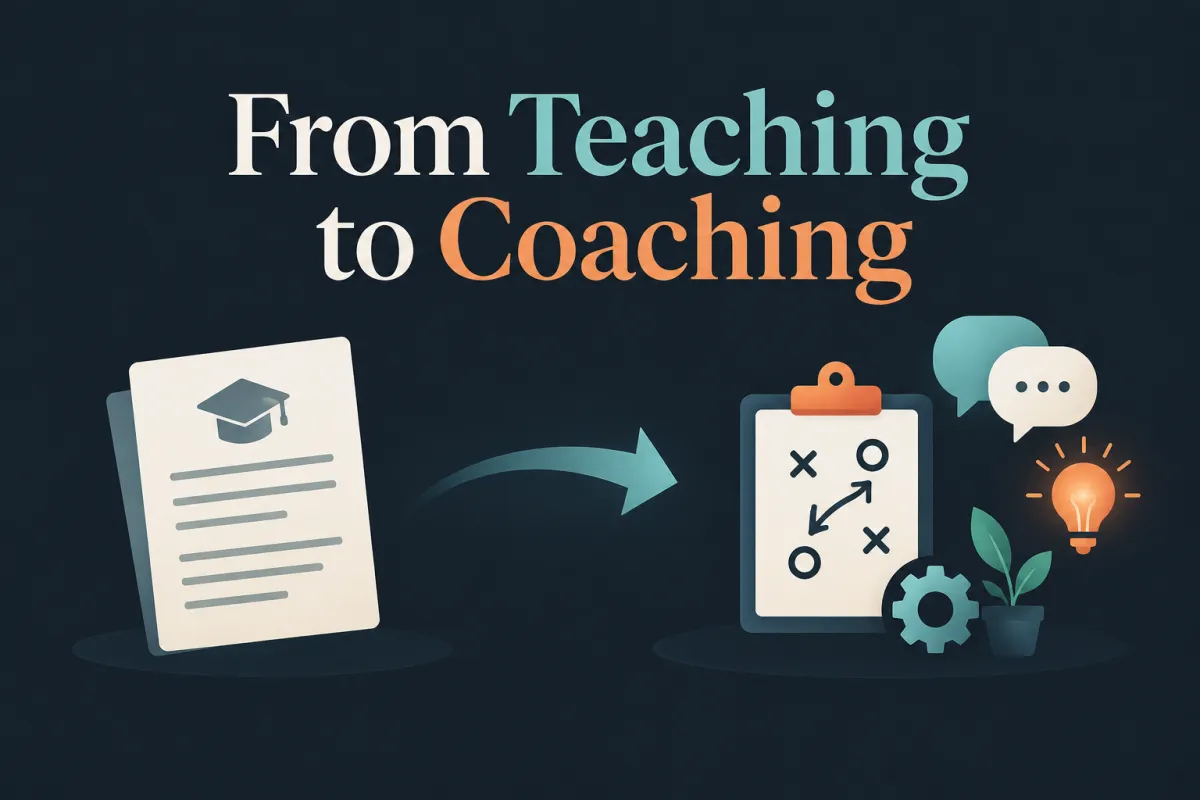
This is why I like separating teaching from coaching
There are some parts of parent training that can happen outside the live meeting.
Parents can watch a short video.
They can read a brief explanation.
They can review an example.
Then when we meet, we already have something to build on.
Instead of spending the whole session introducing the concept, we can start with what happened when they tried it.
That makes the conversation much more specific.
It also gives us more time for the things that are difficult to automate or standardize.
Listening.
Observing.
Practicing.
Problem solving.
Adjusting.
Those are the parts that need a clinician.
More information isn’t always what the parent needs next
Sometimes we assume that if a parent isn’t implementing a strategy, they need more teaching.
That isn’t always true.
They may already understand it.
The problem may be that the strategy is too complicated.
Or it may not fit the routine.
Or they may not know what to do when the child responds differently than expected.
Or they may have tried it once, had a difficult experience, and stopped.
In those situations, another explanation may not help much.
What helps is looking at what happened and adjusting from there.
That’s one of the reasons I don’t want parent training to feel like a sequence of lectures.
The session should still follow the family
Using live time more intentionally doesn’t mean every session has to follow the same format.
Some weeks we may need more teaching.
Some weeks we may need more practice.
Some weeks we may spend most of the time troubleshooting one very specific issue.
That’s okay.
The point isn’t to create another rigid structure.
The point is to be intentional about which parts of the work really require live clinical time.
How this influenced the new ACHIEVE platform
This is one of the ideas that shaped the online version of ACHIEVE.
In the newer Problem-Solving curriculum, every section includes a parent-facing video.
Those videos can handle some of the didactic teaching.
The parent gets the explanation.
The BCBA has the deeper clinical material.
Then the live session can focus more heavily on what happened when that information met real life.
That was important to me.
I didn’t want the platform to replace the BCBA.
I wanted it to free up more of the BCBA’s time for the part that actually requires a BCBA.
The video can explain the concept.
The BCBA can help the family use it.
Parent training should be active
At its best, parent training isn’t just a transfer of information.
It’s a working session.
We’re figuring things out together.
We’re looking at what happened.
We’re deciding what to keep.
We’re deciding what to change.
We’re practicing.
We’re adjusting.
And we’re making sure the recommendation actually works in the family’s real life.
That’s the part I want more time for.
Because ultimately, the goal isn’t for the parent to leave knowing more terminology.
The goal is for them to leave better able to help their child.
That idea shaped the way we built the new ACHIEVE online platform. Parent-facing videos can handle some of the teaching so live sessions can focus more on coaching, practice, and problem solving. If you want to see how the platform works, you can learn more here.
Want a simple way to plan your next parent training session? The free ACHIEVE Session Companion helps you choose a focus, track what happens, and organize the information you’ll need for your note afterward. Free Download: ACHIEVE Session Companion.


