Token Economy in ABA: Complete Guide to Motivating and Teaching Learners
Within the field of Applied Behavior Analysis (ABA), reinforcement plays a vital role in strengthening behavior. Decades of research support the use of token economies as an effective, flexible way to deliver reinforcement across a wide range of settings and behavioral goals (Matson & Boisjoli, 2009; Boniecki & Moore, 2003; Carnett et al., 2014). Token economy systems allow interventionists to reinforce desired behaviors, build motivation, and help learners develop valuable new skills in structured, predictable ways.
Token Economy in ABA: Complete Guide to Motivating and Teaching Learners
Token Economy and the Real World
Introducing a Token Economy to Learners
Teaching Token Value to Learners With Strong Language
Teaching Token Value to Learners With Limited Language
Creating Token Systems That Motivate
Using Perseverative Interests to Increase Effectiveness
Token Economy and Intrinsic Motivation
Intrinsic vs. Extrinsic Motivation
How a Token Economy Builds Intrinsic Motivation
Example: Using Token Economy to Build Intrinsic Motivation
Token Economy Example to Build Intrinsic Motivation
Interest-Based Token Boards (More Motivating)
Token Economy in Compliance Training (Video Example)
Example behaviors for simple home systems:
Choosing backup reinforcers at home
The Jar System (For Bigger Rewards)
Examples of reinforcers for complex systems:
Behaviors teachers commonly reinforce:
Common school reinforcers include:
Advantages and Disadvantages of Token Economy
1. Teaches Delayed Gratification
3. Allows Reinforcement Even When Backup Reinforcers Aren’t Available
5. Easy to Use With Multiple Learners
6. Promotes Consistency Across Adults
7. Teaches a Real-World Concept
Disadvantages of Token Economy
1. Tokens Do Not Have Innate Value
4. Token Loss Can Be Demotivating
Other Considerations for Token Economy
Thinning the Schedule of Reinforcement
Satiation of Reinforcer Options
What Is a Token Economy?
A token economy is a reinforcement strategy in which an individual earns generalized reinforcers—called tokens—that can later be exchanged for backup reinforcers, such as preferred items or activities. While tokens themselves hold no natural value, they become powerful through repeated pairing with valued reinforcers.
Token economies can be used to reinforce a variety of skill domains, including:
Academic behaviors
Communication
Daily living skills
Adaptive skills
Prosocial behaviors
Reduction of challenging behaviors through reinforcement of appropriate alternatives
Because they are highly adjustable and effective across ages and abilities, token economies are a foundational tool in ABA.
How Token Economy Works
Token Economy and the Real World
Token economies mirror real-world systems. In the broader economy, money functions as our token. A dollar bill has no inherent value; it’s simply paper. But because we learn that money can be exchanged for things we need or want, we work to earn it.
This comparison helps interventionists understand how tokens acquire reinforcing value:
Adults work for money
Learners work for tokens
Tokens are exchanged for backup reinforcers
The perceived value of the backup determines how hard a learner will work
If you wouldn’t work an entire week for a single pretzel, you shouldn’t expect your learner to complete challenging tasks for something they do not value. Reinforcement must match the learner’s perceived effort, not your own assumptions about difficulty.
Perceived effort is key.
Tasks that seem simple to you may feel overwhelming to the learner. Their behavior will tell you how they perceive task difficulty. Reinforcer assessments help determine how much work a learner will complete for a given reinforcer.
To learn more about reinforcer assessments, read our post: Choosing Reinforcers: Reinforcer Assessments Or Preference Assessments.

When to Use a Token Economy
While token economies are highly flexible, certain conditions make them especially appropriate:
Use a token economy when:
The learner benefits from structured reinforcement
You want to avoid an FR1 schedule of reinforcement, but still need frequent reinforcement
Tangible reinforcers alone lose value quickly
You need a simple, predictable system that’s easy to implement
The learner responds well to visual supports
The learner needs delayed reinforcement to build persistence
Learners Who Benefit Most
Token economies are effective with:
Children and teens who understand earning and exchanging
Learners who thrive on visual systems
Learners who need reinforcement delivered frequently and consistently
Learners who need support building intrinsic motivation
Autistic learners who may not respond strongly to social reinforcement alone
Language level matters only in how the token value is taught—not whether tokens can be used.
Introducing a Token Economy to Learners
Before implementing a token economy, you must make four critical decisions:
Which tokens will be used
(coins, stickers, digital icons, Velcro pieces, themed tokens)What the learner must do to earn a token
(clear, objective criteria)How many tokens are needed to “buy” the backup reinforcer
(and how this will be visually shown)Which backup reinforcers will be available
(items, activities, sensory experiences, social interactions, etc.)
Token economies can be very simple or highly complex. The right system depends on the learner’s communication level, cognitive skills, interests, and the interventionist’s capacity to maintain the system.
Teaching Token Value to Learners With Strong Language
Learners with solid receptive language typically understand token systems quickly when you explain:
What earns a token
How many tokens are needed
What the reinforcer choices are
When they can exchange tokens
Even with strong language, visual supports help the learner know:
What they are working for
Their progress toward the goal
How many tokens remain
Teaching Token Value to Learners With Limited Language
Token economies can be highly effective for learners with limited communication skills, but require pairing to help the learner understand that tokens have value.
A step-by-step teaching procedure:
Start with a simple token board with only one token missing.
When the learner earns a token, immediately:
Deliver a preferred tangible reinforcer
Present the token
Provide specific praise (“You earned a token!”)
Once value builds, remove two tokens from the board.
Pair the first token with a small reinforcer, and the second token with a larger or more powerful reinforcer.
Gradually remove more tokens until the learner must complete the entire board to exchange.
Fade tangible reinforcers, but continue pairing tokens with praise.
This systematic approach teaches the learner that tokens have meaning and are worth working for.
Creating Token Systems That Motivate
Tokens can take many forms, including:
Coins
Poker chips
Stickers
Velcro pictures
Checkmarks in a box
Digital tokens on a device
A system becomes even more effective when the token itself is motivating, not just the backup reinforcer.
Using Perseverative Interests to Increase Effectiveness
Research by Carnett et al. (2014) shows that using tokens related to a learner’s restricted interest (e.g., rockets, animals, trains) increases engagement and treatment effects.
This means:
If the learner loves dinosaurs → use dinosaur tokens
If they love space → use rocket or planet tokens
If they love animals → use animal icons
Interest-based token systems increase intrinsic motivation over time and reduce reinforcer satiation.
Token Economy and Intrinsic Motivation
Intrinsic vs. Extrinsic Motivation
Intrinsic motivation occurs when an individual finds an activity enjoyable or satisfying on its own. However:
Many autistic children are not naturally motivated by social reinforcement.
Social praise alone may not function as a reinforcer.
New or difficult tasks often require external reinforcement first.
How a Token Economy Builds Intrinsic Motivation
Token economies help:
Pair tasks with reinforcement
Delay reinforcement gradually
Thin reinforcement schedules
Transition learners from external to internal motivation over time
Through reinforcement pairing and gradual schedule thinning, learners start to experience tasks as more reinforcing—even without frequent external rewards.
Example: Using Token Economy to Build Intrinsic Motivation
Token Economy Example to Build Intrinsic Motivation
You want to teach your client, Craig, to become more intrinsically motivated to complete a puzzle. You chose this activity because Craig struggles with engaging in appropriate leisure activities and often engages in challenging behavior when he has nothing to do. Currently, Craig completes a 12-piece jigsaw puzzle and receives a Goldfish cracker after he puts together each piece. It takes him about 5 minutes to finish the puzzle.
You find a 24-piece puzzle and get started. You set out a token board with 12 tokens. Initially, you pair each token with a Goldfish cracker and when Craig earns all 12 tokens, he will trade them in for 3 minutes of his favorite video. For this first puzzle, he earns a token for each piece he puts together and with each token, he gets a cracker. He stops the puzzle halfway through to watch the video and earns another 3 minutes when he completes the puzzle. This puzzle took him 20 minutes to complete and he appeared happy to get the Goldfish and watch the video.
Thinning the Schedule
Over time, you thin the schedule of reinforcement using the token economy system. He begins to earn a token for every 2 pieces he puts together, then every 3. You continue to pair the tokens with social praise and incorporate social praise in between the delivery of tokens.
Over time, Craig begins to tackle 50-piece puzzles and completes the whole puzzle before earning a token. Through pairing and schedule thinning, Craig becomes increasingly intrinsically motivated to complete puzzles. Eventually, puzzles themselves may become reinforcing.
Token Economy Examples
Token economies can be applied across environments and customized for different learner needs. Below are examples of simple, creative, and advanced token systems used in homes, schools, and clinical settings.
Simple Token Boards
Simple token boards are often the easiest place to start. They usually include:
A visual of the backup reinforcer (“I’m working for ___”)
3–10 token spaces
Visual cues that show progress
These boards help learners understand:
What they are earning
How many tokens they need
How close they are to reinforcement
Even basic systems can significantly increase motivation and structure.
Interest-Based Token Boards (More Motivating)
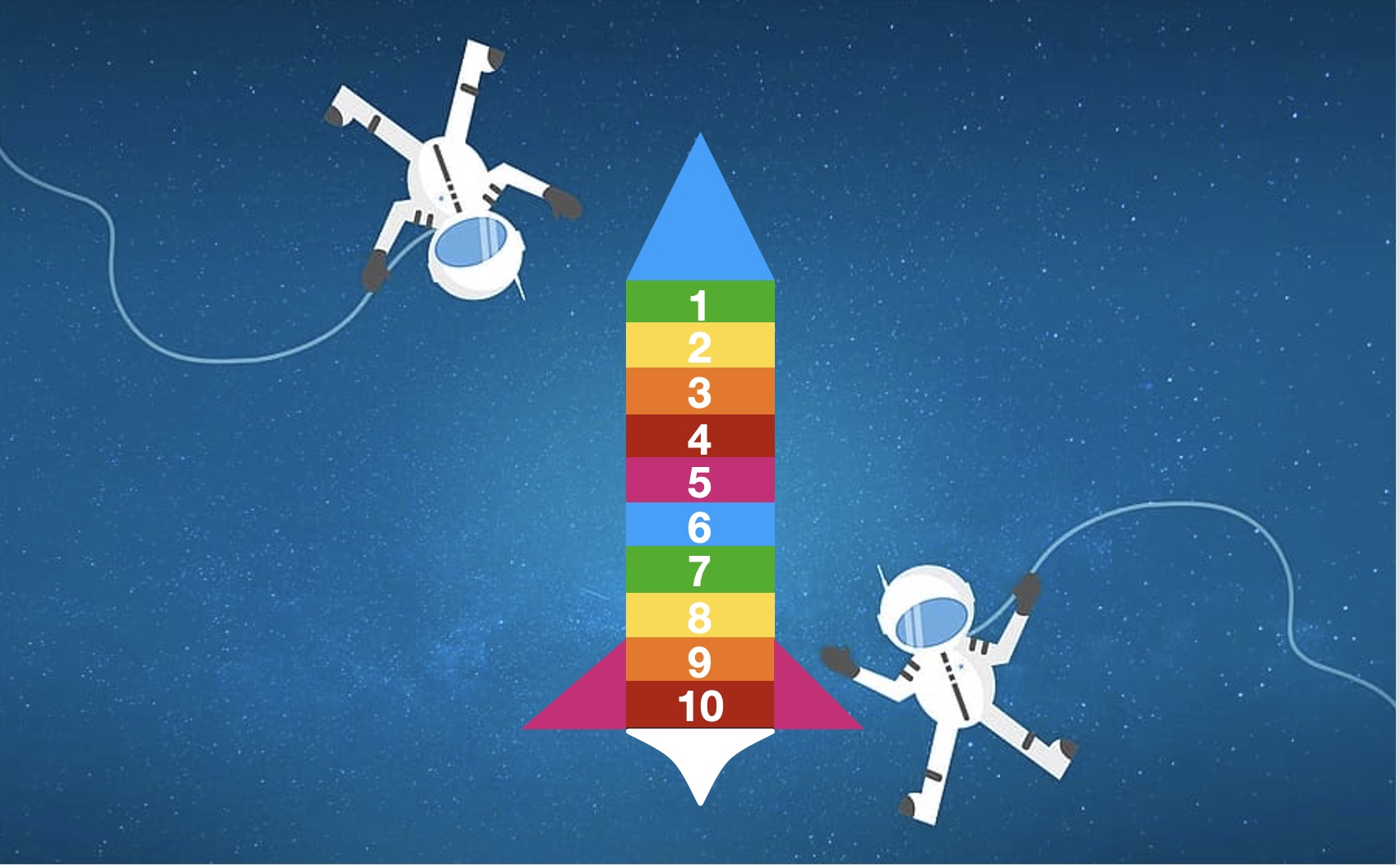
Using token designs aligned with a learner’s favorite topics (e.g., rockets, trains, Pokémon, vehicles) increases engagement and makes tokens themselves more reinforcing.
For example:
If a learner loves space → use a rocket token board
If a learner loves animals → use animals as tokens
If a learner loves cars → use car icons
Research (Carnett et al., 2014) shows that perseverative-interest token systems increase treatment effects and reduce challenging behavior.

Download this Rocket Token Board
Digital Token Boards
With access to tablets, phones, and computers increasing across home and school environments, digital token boards are becoming an incredibly motivating tool.
Benefits include:
Built-in animations
Fun sound effects
Easy reset between trials
No physical pieces to lose
Highly portable
Perfect for telehealth and virtual learning
These work especially well for learners who love technology.
Token Economy in Compliance Training (Video Example)
Your video demonstrating token boards during compliance training fits perfectly here. It shows:
Fast reinforcement
Fade-in prompting
Maintaining motivation during challenging tasks
Token Economy at Home
Token economies are one of the most parent-friendly ABA interventions. They are simple, flexible, and do not require specialized materials.
Parents can use them to reinforce:
Manners
Cooperative play
Cleaning up
Following routines
Homework
Toileting routines
Daily living tasks
Sibling interactions
Transitioning away from preferred activities
Simple Token Systems for Home
Parents often use token boards to reinforce one behavior at a time (highly recommended for early success).
Example behaviors for simple home systems:
Turn-taking
Brushing teeth steps
Sitting at the table during meals
Cleaning up toys
Completing chores
Following simple directions
Practicing imitation or language skills
Choosing backup reinforcers at home
Parents often choose:
Extra time with a favorite toy
Bubbles
Stickers
Video time
A small treat
A special activity with a parent
Time outdoors
A silly video together
Parents need clear coaching to limit non-contingent access to backup reinforcers. If a child gets the reward anytime, it won’t function as reinforcement.
The Jar System (For Bigger Rewards)
Some children benefit from a system where they work toward a larger reward earned over time. The jar system builds on token economy skills and increases delayed gratification.
How the Jar System Works
Choose a high-value reinforcer (e.g., trip, toy, activity).
Choose items to fill the jar (pom poms, cubes, glass beads).
Give one item each time the learner engages in the target behavior.
When the jar is full, the child earns the big reward.
This system is perfect for:
Older learners
Learners with stronger language skills
Building long-term goals
Reinforcing multiple behaviors
Creative Variations
Use Chuck E. Cheese tokens for a planned trip
Use puzzle pieces to reveal a surprise
Use Lego bricks to build a reward structure
Parents love these systems because they are visual, motivating, and easy to understand.
More Complex Token Systems
For learners who can handle more advanced systems, parents and teachers can implement point-based or multi-behavior systems.
Examples:
Points on a dry-erase chart
A customizable punch card
A weekly point tracker
A classroom “store”
These systems reinforce:
Homework completion
Chores
Morning and bedtime routines
Sleeping independently
Being kind to siblings
Completing classroom tasks
Classroom participation
Backup reinforcers must match the effort and delay required.
Examples of reinforcers for complex systems:
A trip to a favorite place
Extra video game time
Special outing with a parent
Toy from a preferred store
Extra recess or free time
A classroom movie party
Complex systems should always be introduced gradually to prevent frustration.
Token Economy at School
Token economies are widely used in educational settings because they:
Are quick to deliver
Fit easily into busy classrooms
Reduce disruptive behavior
Increase academic engagement
Promote positive classroom culture
Support classroom-wide systems or individualized interventions
Behaviors teachers commonly reinforce:
Completing morning work
Raising a hand before speaking
Staying seated
Following directions
Cleaning up
Transitioning between activities
Helping peers
Walking quietly in hallways
Completing academic tasks
Participating in group work
Teachers can reinforce:
Individual students
Small groups
Entire classrooms
Backup reinforcers vary based on age and classroom structure.
Common school reinforcers include:
Prize box items
Extra recess
Lunch with the teacher
Special classroom jobs
Game time
Stickers or badges
Free drawing or coloring
Class parties
Token economies allow teachers to maintain consistency even when students have different needs.
Advantages and Disadvantages of Token Economy
Token economies are powerful, flexible interventions — but they’re not perfect. Understanding the strengths and potential pitfalls helps you implement them effectively.
Below is a clear comparison to guide decision-making.
Advantages of Token Economy
1. Teaches Delayed Gratification
A token economy naturally teaches patience. Learners must earn multiple tokens before receiving the backup reinforcer, making it an ideal next step after FR1 reinforcement.
2. Extremely Flexible
Token economies can reinforce:
Any target behavior
Multiple behaviors
Short- or long-term goals
Individuals or groups
Simple to highly complex systems
They can incorporate almost any type of token and backup reinforcer.
3. Allows Reinforcement Even When Backup Reinforcers Aren’t Available
Tokens bridge the gap between the behavior and reinforcement. This helps maintain motivation even if the primary reinforcer is delayed.
4. Keeps Learners Engaged
Tokens maintain excitement and reduce satiation. Even when the backup reinforcer is familiar, tokens can sustain interest and momentum.
5. Easy to Use With Multiple Learners
Teachers and parents can reinforce several learners at once, even when each learner is working toward different reinforcers.
6. Promotes Consistency Across Adults
Having a structured token system helps interventionists, teachers, and parents reinforce behaviors the same way. Consistency accelerates progress.
7. Teaches a Real-World Concept
Tokens function like money. When learners understand that tokens have value, they build a foundation for financial concepts later in life.
Disadvantages of Token Economy
1. Tokens Do Not Have Innate Value
Some learners may struggle to understand why tokens matter. Without systematic pairing, the system may fail.
2. Requires Planning
Effective implementation means ensuring:
Tokens are available at all times
Backup reinforcers are prepared
The system is explained clearly
Expectations are consistent
Poor planning reduces effectiveness.
3. Frustration Can Occur
If:
Tokens are too hard to earn
Backup reinforcers are not motivating
The learner forgets they’re earning tokens
Frustration and decreased responding may follow.
4. Token Loss Can Be Demotivating
Although response cost is sometimes used, taking tokens away can damage rapport or increase problem behavior if used carelessly.
Other Considerations for Token Economy
A token economy is simple in concept, but several advanced variables affect how well it works. Addressing these proactively can dramatically improve success.
Thinning the Schedule of Reinforcement
Token economies make reinforcement thinning much smoother. As learners progress from immediate reinforcement to earning tokens, motivation stays high even as expectations increase.
Example
You increased the reinforcement schedule from FR1 → FR4 with no problem.
At FR6, the learner’s behavior worsens.
Introduce a token board with 4 tokens.
Deliver tokens on a VR2 schedule, then exchange them for a larger VR8 reinforcer.
This process:
Maintains motivation
Reduces emotional responding
Prevents extinction bursts
Builds endurance for longer tasks
Gradual thinning is essential for long-term behavior change. For more information about schedules of reinforcement, read our post: Understanding Consequence Interventions: Punishment vs Reinforcement.
Satiation of Reinforcer Options
Even highly preferred reinforcers lose value with repeated use. To maintain motivation:
Conduct preference assessments frequently
Rotate reinforcer options
Introduce novel items
Avoid giving reinforcers freely outside the token system
If responding decreases, reinforcer effectiveness is likely the culprit.
Using Response Cost (Use With Caution)
Response cost means removing tokens following problem behavior.
Example
A 6-year-old learner uses a token board to increase academic participation.
He earns tokens for:
Completing worksheets
Making relevant comments
Participating in lessons
He loses a token each time he swears in class (response cost).
Why use sparingly?
It can negatively impact rapport
It may increase emotional behavior
It may overshadow positive reinforcement
It doesn’t teach a replacement skill
If used at all, response cost must be:
Clearly defined
Used sparingly
Paired with strong reinforcement
Monitored carefully
As a general rule in compassionate ABA:
Build behavior up before taking anything away.
Conclusion
Token economies have decades of research supporting their use across home, school, and clinical environments. Their strength lies in their flexibility: they can be simple or complex, individualized or classwide, short-term or long-term. With thoughtful implementation—clear expectations, motivating reinforcers, consistent delivery, and gradual thinning—token economies can dramatically improve engagement, reduce challenging behaviors, and build essential skills like delayed gratification and intrinsic motivation.
When used compassionately and strategically, token economies become more than a reinforcement system; they become a meaningful pathway toward independence, confidence, and long-term success.
References and Related Reading
Boniecki, K. A., & Moore, S. (2003). Breaking the silence: Using a token economy to reinforce classroom participation. Teaching of Psychology, 30(3), 224-227.
Carnett, A., Raulston, T., Lang, R., Tostanoski, A., Lee, A., Sigafoos, J., & Machalicek, W. (2014). Effects of a perseverative interest-based token economy on challenging and on-task behavior in a child with autism. Journal of Behavioral Education, 23(3), 368-377.
Doll, C., McLaughlin, T. F., & Barretto, A. (2013). The token economy: A recent review and evaluation. International Journal of basic and applied science, 2(1), 131-149.
Falligant, J. M., & Kranak, M. P. (2022). Rate Dependence and Token Reinforcement? A Preliminary Analysis. The Psychological Record, 72(4), 751-757.
Ivy, J. W., Meindl, J. N., Overley, E., & Robson, K. M. (2017). Token economy: A systematic review of procedural descriptions. Behavior Modification, 41(5), 708-737.
Kazdin, A. E. (1982). The token economy: A decade later. Journal of applied behavior analysis, 15(3), 431-445.
Kim, J. Y., Fienup, D. M., Reed, D. D., & Jahromi, L. B. (2022). A Rapid Assessment of Sensitivity to Reward Delays and Classwide Token Economy Savings for School-Aged Children. Journal of Behavioral Education, 1-24.
Massaro, I. (2022). Evaluation of the value of activity-based token reinforcement (Doctoral dissertation, Rutgers University-Graduate School of Applied and Professional Psychology).
Matson, J. L., & Boisjoli, J. A. (2009). The token economy for children with intellectual disability and/or autism: A review. Research in Developmental Disabilities, 30(2), 240-248.
Murniyati, B., & Wardhani, J. D. (2023). Economic Token Techniques as an Effort to Increase the Independence of Children Aged 4-5 Years. Early Childhood Research Journal (ECRJ), 5(2), 29-43.
National Autism Center. (2009). National standards report. Retrieved December 27, 2020, from http://www.nationalautismcenter.org/
Radhamani, K., & Kalaivani, D. (2023). Token economies in the classroom: A review of literature. International Journal of Educational Psychology, 13(1), 1-15.
Richling, S. M., Williams, W. L., & Carr, J. E. (2019). The effects of different mastery criteria on the skill maintenance of children with developmental disabilities. Journal of Applied Behavior Analysis, 52(3), 701-717.


